



Aluminium vs Timber Picnic Tables
Choosing the Right Material for Outdoor Seating
When selecting picnic tables for schools, parks or public spaces, one of the most important decisions is the material.
The two most common options are aluminium and timber.
While both can serve a purpose, they perform very differently over time.
The real question isn’t just:
Which looks better today?
It’s:
Which will perform better over the next 10–15 years?

Durability – Built for the Long Term
Aluminium Picnic Tables
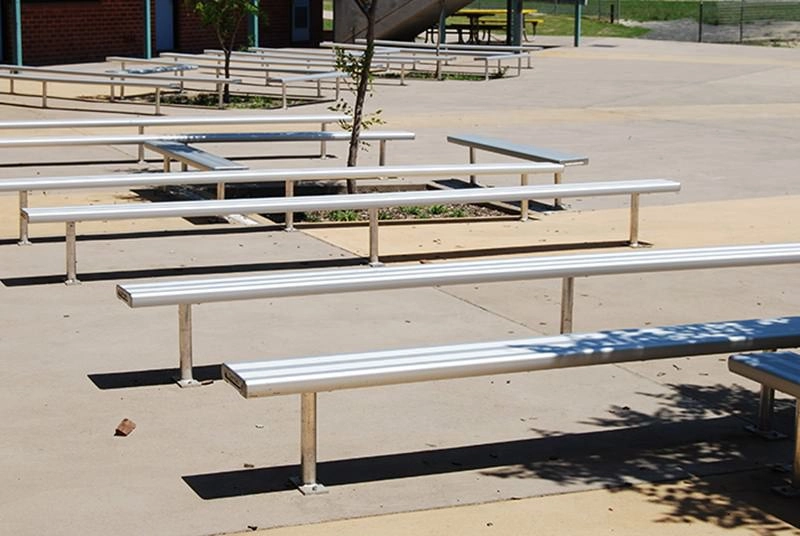
Aluminium is engineered for long-term outdoor use.
It:
- Does not rust or corrode
- Resists weather damage
- Maintains structural integrity over time
Timber Picnic Tables
Timber is more vulnerable to environmental conditions.
Over time it can:
- Crack and split
- Warp due to moisture
- Deteriorate under UV exposure
In high-use environments like schools and parks, durability becomes critical — and aluminium consistently outperforms timber.
Maintenance Requirements
Aluminium
- Requires minimal maintenance
- No painting, sealing or treatment
- Easy to clean
Timber
- Requires regular maintenance
- Needs sealing, staining or painting
- Prone to wear and degradation
Over time, timber maintenance adds significant cost and labour.
For councils and schools managing multiple assets, this becomes a major operational issue.
Safety Considerations
Safety is a key factor in public and school environments.
Aluminium Advantages
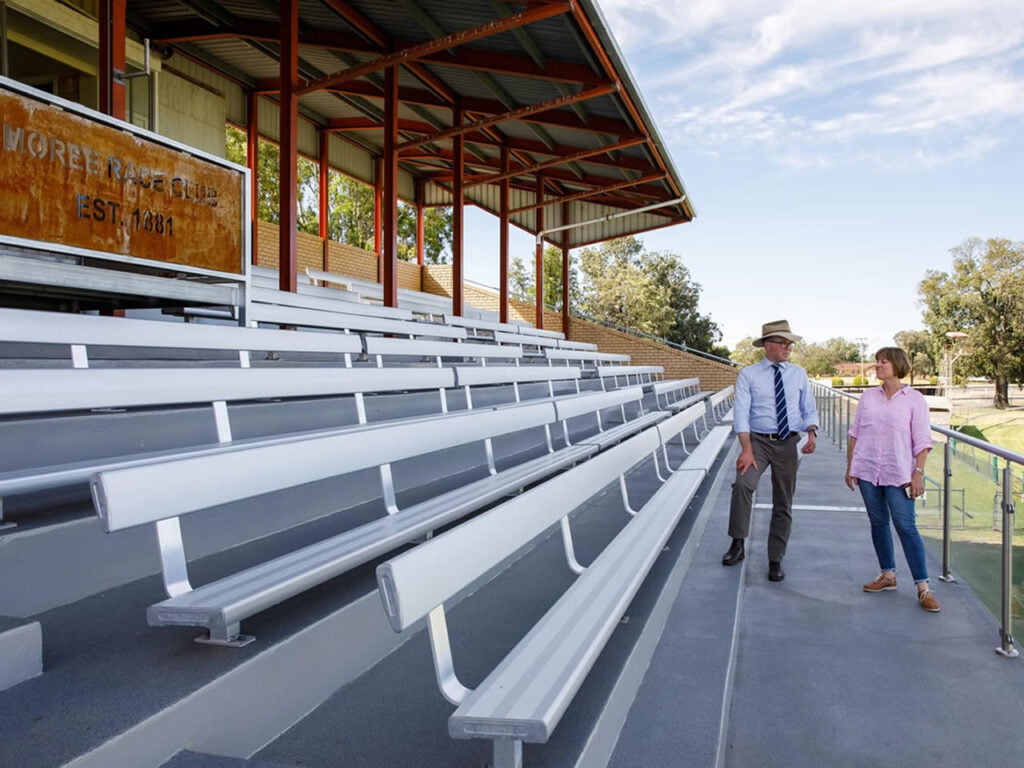
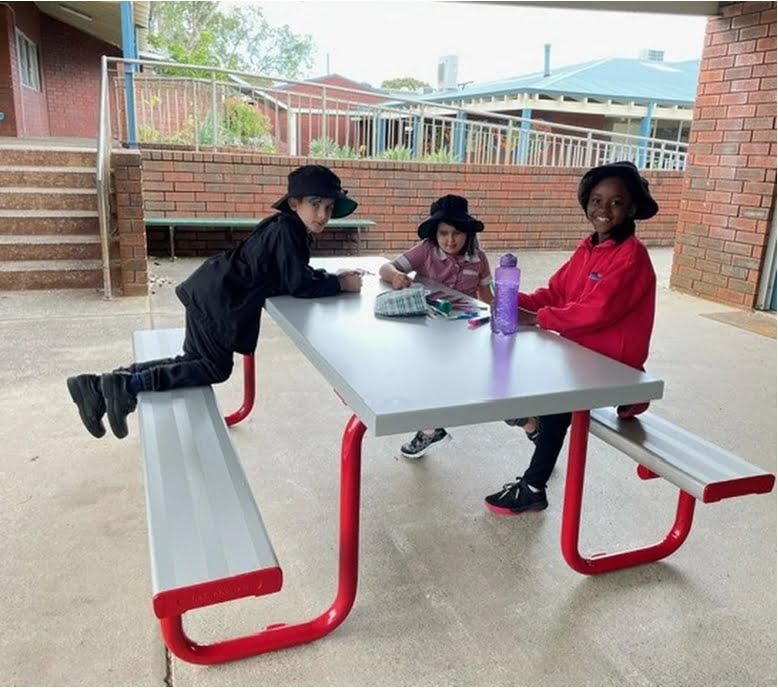
- Smooth, consistent surfaces
- No splinters
- Stable and engineered construction
Timber Risks
- Can develop splinters over time
- Surface degradation may create hazards
- Requires ongoing checks and repairs
In environments with children or high public use, aluminium offers a safer long-term solution.
Cost – Upfront vs Long-Term Value
At first glance, timber picnic tables may appear more affordable.
However, this only reflects the initial purchase cost.
Timber Lifecycle Costs
- Ongoing maintenance
- Repairs and replacements
- Shorter lifespan
Aluminium Lifecycle Value
- Minimal maintenance costs
- Longer lifespan
- Lower total cost over time
Aluminium is typically more cost-effective when viewed as a long-term investment.
Performance in Australian Conditions
Outdoor furniture in Australia must withstand:
- High UV exposure
- Rain and humidity
- Temperature fluctuations
Aluminium Performance
- Resistant to all weather conditions
- Maintains strength and appearance
- Performs well in coastal and inland environments
Timber Performance
- Susceptible to weather damage
- Can degrade faster in harsh conditions
- Requires ongoing treatment to maintain
Aluminium is better suited to the demands of Australian outdoor environments.
Appearance and Longevity
Timber is often chosen for its natural look.
However:
- Its appearance changes over time
- It can fade, crack and wear
- Requires maintenance to retain visual appeal
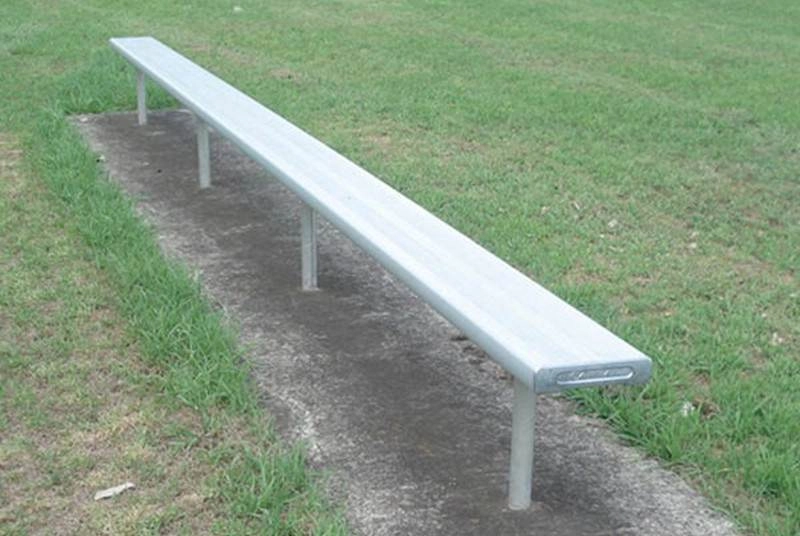
Aluminium offers:
- Consistent appearance
- Clean, modern finish
- Long-term visual reliability
For public spaces, consistency and durability often outweigh initial aesthetics.
Environmental Considerations
Both materials can be used responsibly, but their impact differs over time.
Timber:
- May require replacement sooner
- Uses coatings and treatments
Aluminium:
- Long lifespan reduces replacement frequency
- Fully recyclable material
Longevity plays a key role in overall environmental impact.
Which is the Better Choice?
For residential or low-use environments, timber may still be suitable.
However, for:
- Schools
- Parks
- Councils
- Commercial outdoor spaces
Aluminium picnic tables are the better choice.
They offer:
- Greater durability
- Lower maintenance
- Improved safety
- Better long-term value
Explore Related Outdoor Seating Solutions
- Aluminium picnic tables
- Picnic tables for schools
- Park furniture picnic tables
- Commercial outdoor table settings
FAQ
Yes, aluminium picnic tables are more durable, require less maintenance and provide better long-term value.
No, timber typically has a shorter lifespan and requires ongoing maintenance to remain functional.
Aluminium is safer as it does not splinter and maintains a consistent surface over time.